Travel Anxiety Checklist: Prepare, Pause, and Keep Going
25% off on product page · save $1.00
Travel Anxiety Checklist: Prepare, Pause, and Keep Going

Start with what you can control
Before travel day, confirm your departure time, route, identification, tickets, and any medication you need to bring. Save essential details somewhere you can access without relying on memory alone. If your phone battery runs low, a written note with your confirmation number and key addresses can be useful.
Next, write down the first three things you will do when you reach the station or airport. They might be “find the departures board,” “confirm my gate,” and “fill my water bottle.” Specific actions are easier to follow than a long mental list, especially in a noisy terminal.
Leave room in your schedule for ordinary delays, and decide whom you can contact if you need help. That person does not have to solve the disruption. Sometimes sending a quick update gives you a moment to pause and organize your options.
Make the checklist yours
Write down your first three actions on arrival, such as finding the departures board, confirming your gate or platform, and locating water. Add a support contact and allow time for ordinary delays.
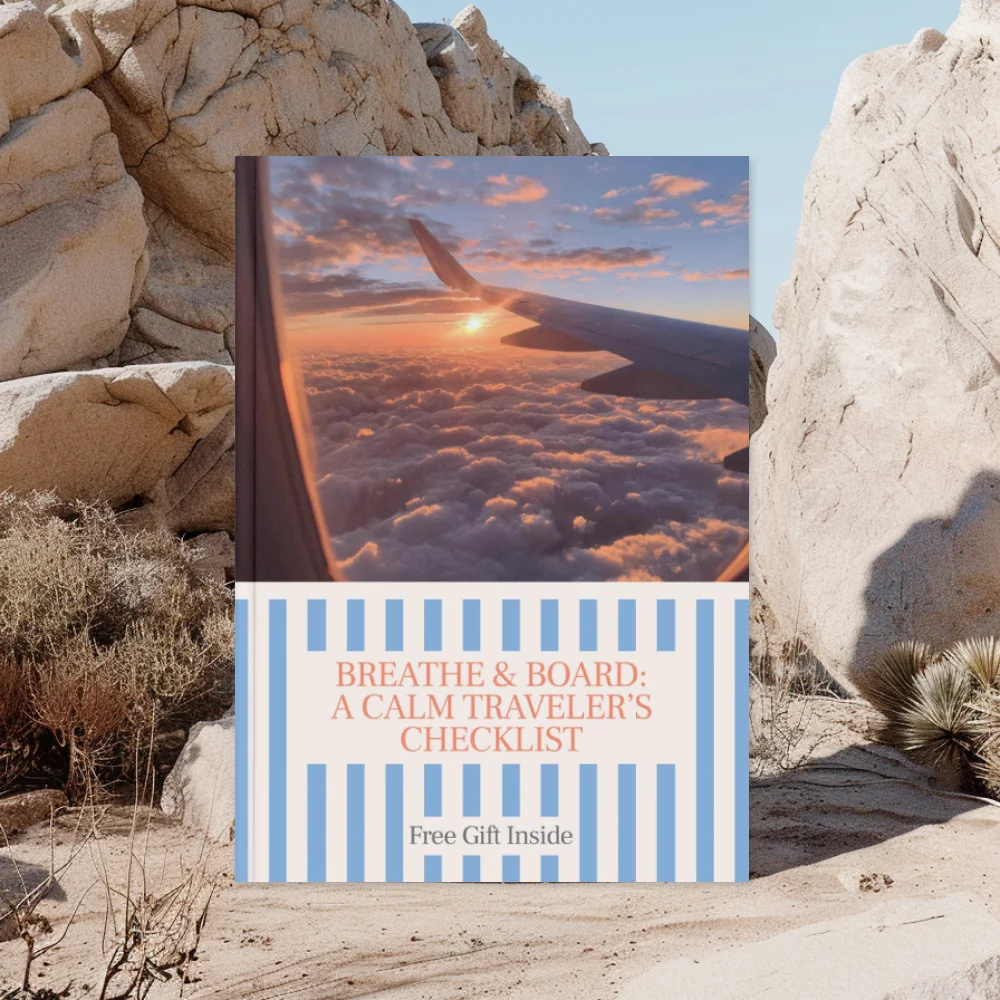
Our Breathe & Board: A Calm Traveler’s Checklist for How to Handle Travel Anxiety and Stress is an option if you want a dedicated travel-anxiety checklist. Your route, schedule, essential documents, and support contacts should still reflect your own trip.
Featured in this guide
Breathe & Board: A Calm Traveler’s Checklist for How to Handle Travel Anxiety and Stress
A small plan for each stage
Before leaving: Gather essentials and name your first action at the terminal. At the terminal: Confirm your gate or platform and how much time you have. If possible, move somewhere quieter without losing access to signs or announcements.
During a delay: Get the latest update, identify one available option, and ask staff for help if you need it. When anxiety rises: Attend to your immediate safety, feel your feet on the floor, and decide where you need to be next.
Check the product’s listed specifications when evaluating a small plan for each stage.
Pause without forcing your breath
If it feels comfortable, breathe in naturally and let your breath out slowly for a few cycles. If paying attention to breathing feels uncomfortable, return to your usual breathing and notice something you can see or feel, such as a sign or the support of your chair.
Box breathing includes breath holds, but you do not need to hold your breath or follow a count. Stop any exercise that makes you dizzy or distressed. A calming exercise is not a substitute for medical or mental health care.
Check the product’s listed specifications when evaluating pause without forcing your breath.
Choose support that fits the trip
Use a checklist as a prompt, not a rulebook. You can skip a calming technique that does not suit you and keep the practical steps that do. If travel anxiety regularly disrupts your plans or daily life, consider speaking with a qualified health professional.
If secondhand shopping is part of your destination plans, our Thrift Like a Pro: Unlock Hidden Treasures – Your Ultimate Guide to Thrift Shopping Like a Pro is a separate guide for that activity, not a travel-anxiety tool.
Before choosing, compare the product details with your daily routine, available space, care needs, and preferred setup. The strongest option is usually the one that fits the intended use clearly and remains simple to clean, store, and check before repeat use.
FAQ
What is the best breathing device to strengthen your lungs?
That depends on why you want to use one and your health needs. Ask a healthcare professional which device, if any, is appropriate rather than treating a travel-calming exercise as lung-strengthening treatment.
Who should not do breathwork?
Gentle, comfortable breathing is different from intense or prolonged breathwork. Stop if you feel dizzy or unwell, and ask a healthcare professional about suitable techniques if you have a relevant medical condition or concerns.
What is the Navy Seal breathing technique to calm down?
This usually refers to box breathing: breathing in, holding, breathing out, and holding again, often for even counts. Do not force the counts or holds; gentle, natural breathing is an alternative.
Why do people cry during breathwork?
People can have different emotional responses while paying close attention to their breathing, including crying. If an exercise feels distressing, stop and return to comfortable, natural breathing; seek support if the distress continues.
See if Breathe & Board: A Calm Traveler’s Checklist for How to Handle Travel Anxiety and Stress fits your setup













Leave a comment