Learn to Read Your Dog Like a Pro: Behavior Signals
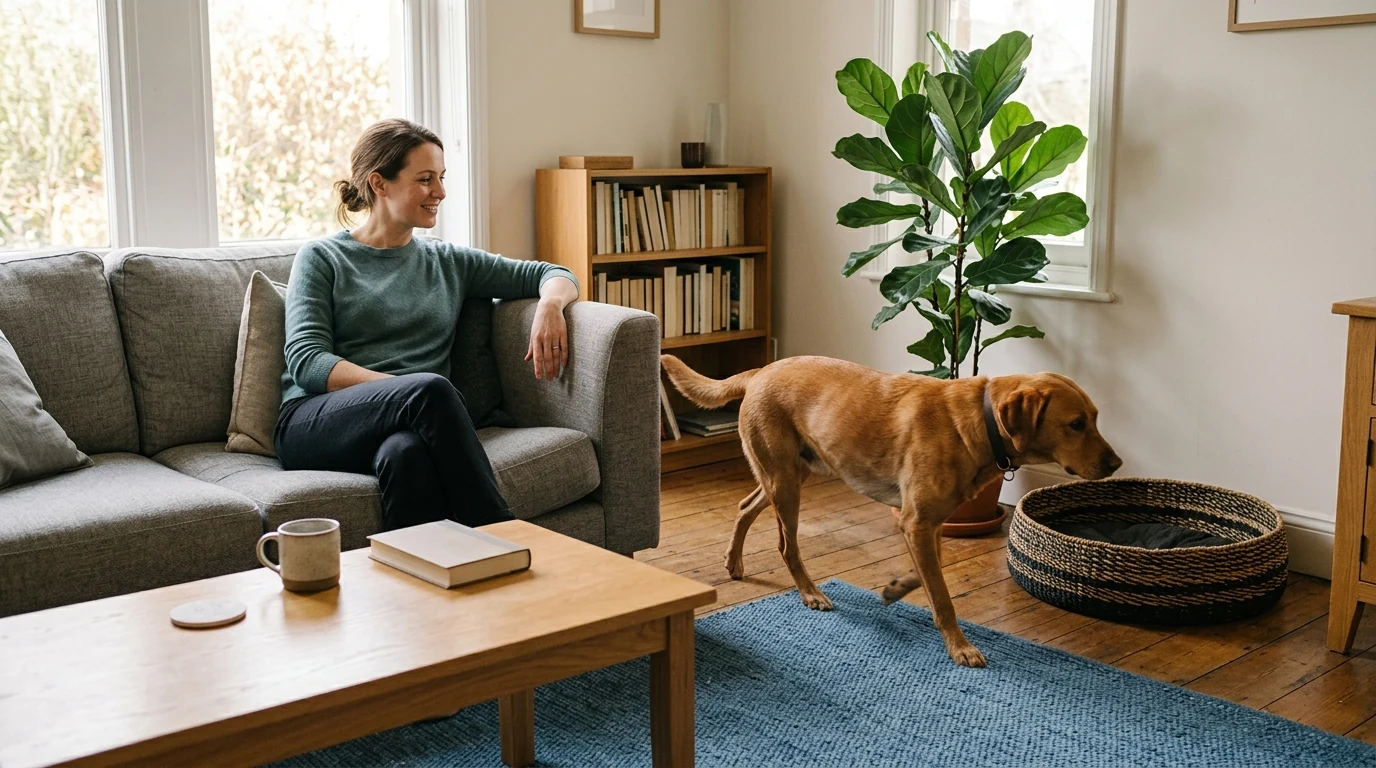
Learn to Read Your Dog Like a Pro: Behavior Signals
Look at the whole dog, not one signal
No single movement tells you everything your dog is feeling. Posture, movement, facial expression, and surroundings work together. A dog who turns away during a noisy gathering may need something different from a dog who briefly looks away while relaxing at home.
Take a tail wag. It shows activity or arousal, but it does not always mean a dog is happy or wants to be approached. Before moving closer, notice whether the rest of the body looks loose or stiff, whether the dog is moving toward you or away, and what has just changed in the environment.
Start by learning what is ordinary for your dog. How do they carry themselves before a familiar walk? What do they do when visitors arrive or when the house gets quiet again? Knowing their usual patterns makes a change easier to spot. For additional examples of body language in context, you can explore the American Kennel Club’s guide to reading dog body language.
Check the listed dimensions for look at the whole dog, not one signal against the available vehicle space before use.
Signals worth noticing
These are prompts for observation, not fixed meanings or a diagnosis. Look for several cues together before deciding how to respond.
| What you notice | What to consider | A calm response |
|---|---|---|
| Loose body and easy movement | Your dog may be comfortable. | Keep interactions gentle and watch for changes. |
| Turning away or moving back | Your dog may want more space. | Pause and allow distance. |
| Stiff posture or a sudden freeze | Your dog may be uncomfortable or highly alert. | Stop approaching and give them room. |
| Repeated lip licking or yawning outside the usual context | These may signal stress alongside other changes. | Reduce pressure and observe the situation. |
A tail wag alone does not tell you whether your dog is happy or wants contact. Notice whether the rest of their body is loose or stiff and whether they move toward you or away.
Check the listed dimensions for signals worth noticing against the available vehicle space before use.
Featured in this guide
Learn to Read Your Dog Like a Pro – Digital Guide to Understanding Dog Behavior Signals for Calm, Confident Dog Owners
Practice in familiar routines
You do not need a difficult encounter to practice. Watch your dog before a walk, when someone comes to the door, and after visitors leave. Our team suggests asking three questions: What changed? What is my dog’s whole body doing? What happens when I give them space?
If your dog backs away when a guest reaches toward them, ask the guest to stop and give your dog room. See whether your dog relaxes without pressure to reengage. You can use that observation to make a better choice next time, even if you cannot name every signal.
Know when to step back or get help
If your dog retreats, stiffens, or freezes, pause rather than insisting on contact. Do not punish a warning signal such as growling; create distance instead. For safety concerns or behavior that keeps happening, seek a qualified behavior professional who can assess your dog’s situation.
Our digital guide is for learning to notice everyday signals, not for diagnosing behavior or replacing veterinary care and one-on-one support.
Check the listed dimensions for know when to step back or get help against the available vehicle space before use.
Keep learning with our digital guide
It is a way to keep learning as you observe your own dog—not a substitute for veterinary care or one-on-one help with persistent concerns.
We know learning can take many forms. If you also enjoy building observation skills in a completely different setting, our Thrift Like a Pro guide covers thrift shopping; it is separate from our dog behavior guide and is not a pet-care resource.
The Living Comfortably With Less Fur Everywhere | Practical Ebook for a Cleaner Home | Smart Pet Hair Control Tips for Real Life loosens and collects dog hair from car upholstery and seat seams; it pairs with the featured product during the same trip.
FAQ
What is the best way to learn to read?
If you mean reading your dog’s behavior, begin with familiar routines and notice their whole body, surroundings, and response when you give them space. For learning to read written text, a literacy instructor or adult education program can help you choose a starting point.
Can you learn how to read on your own?
You can build dog-observation skills on your own by watching patterns across everyday situations. Get qualified help for safety concerns or persistent behavior changes.
What is a free app for adults to learn to read?
If you mean written literacy, ask your local library or adult education program which free apps they recommend. An app cannot assess your dog’s behavior or replace professional support when you have a safety concern.
Where can I learn to read for free?
For written literacy, your local library or adult education program may offer free learning options. To learn about dog body language, you can start with the free AKC and RSPCA resources linked above.
Is there a free way to learn to read online?
Yes. If you want to learn about dog behavior signals, the free resources linked above are a starting point; if you mean written literacy, your library can help you find free online lessons.
See if Learn to Read Your Dog Like a Pro – Digital Guide to Understanding Dog Behavior Signals for Calm, Confident Dog Owners fits your setup
Recommended for you














Leave a comment