Best AI Color Analysis Tool: What to Look For
10% off on product page · save $2.22
Best AI Color Analysis Tool: What to Look For
Which AI color analysis tool is the best?
The best AI color analysis tool is one that gives you a usable color palette and lets you check its recommendations against real clothing. For most shoppers, that means choosing a tool that analyzes your selfie, explains its suggested seasonal palette, and shows specific colors to try or avoid. Treat the result as a starting point, not a final verdict.

Look for a useful palette, not just a season name
A label such as “Soft Autumn” is less useful on its own than a palette you can take shopping. Look for color swatches and guidance on neutrals, accent colors, jewelry metals, and makeup shades; then compare those suggestions with pieces you already own. A tool that only names a season leaves too much interpretation to you.

Featured in this guide
AI Color Analysis From Your Selfie – Smart Personal Color Guide Ebook | Discover Your Best Colors with an ai color analysis app from a selfie
Check what the tool does with your photo
Because these tools estimate coloring from an image, the quality of the input matters. Use a clear, unfiltered selfie in indirect daylight, with your face evenly lit and as little colored light reflecting onto your skin as possible. If the tool changes its answer dramatically between two similar photos, be cautious about buying around either result.
Compare colors at your neckline
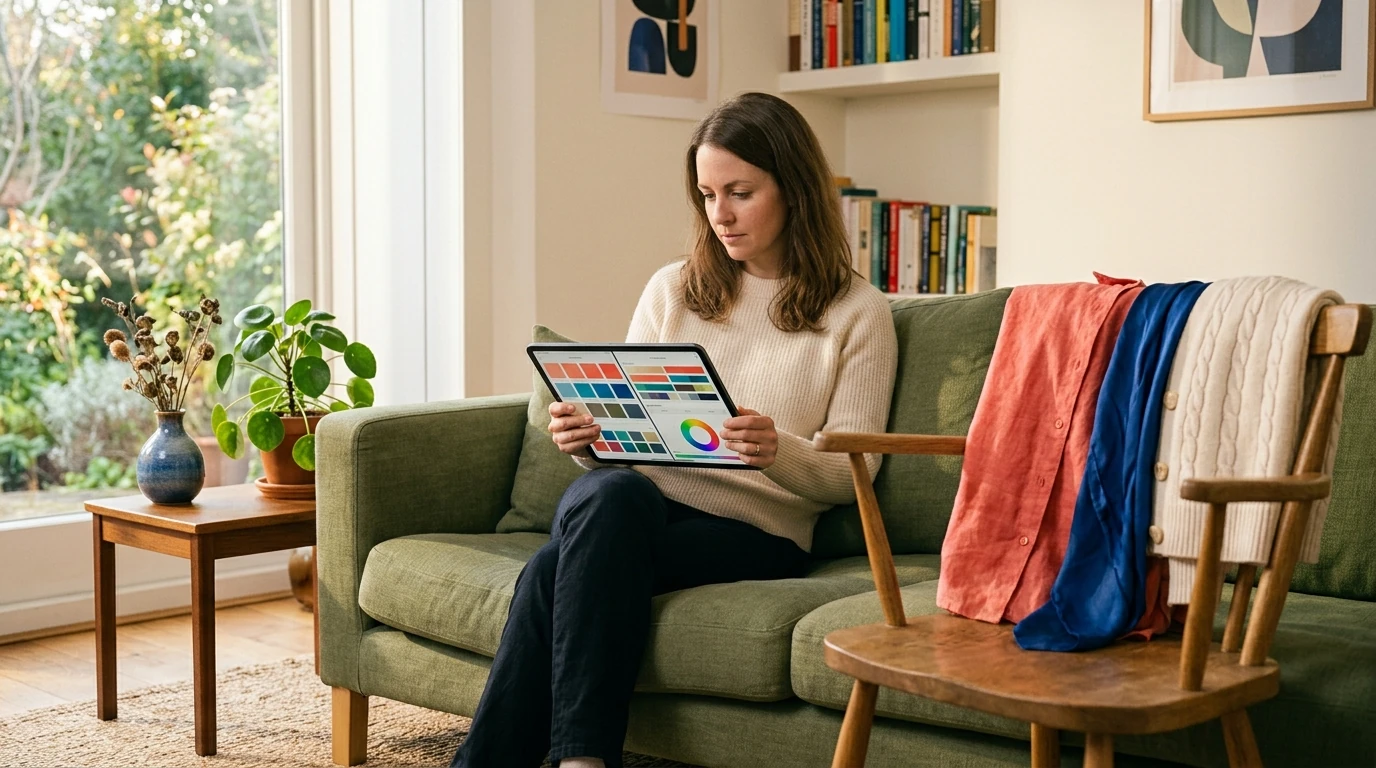
Use the AI palette to choose two or three suggested colors, then hold garments or fabric swatches near your face in daylight. Watch for whether a color makes your skin look even and your eyes clear, rather than judging the color by how attractive it looks on a screen. A shirt, scarf, or jacket is a more useful test than a color worn far from your face.
Make the recommendation fit your wardrobe
The best result should help you make a purchase decision, not require you to replace everything you own. Before buying, check whether the suggested colors work with your existing coats, bags, and shoes, and whether a retailer’s product photos match the color in person. For a fuller walkthrough, see our guide to AI color analysis from your selfie.
Know when to get a second opinion
If your results conflict, repeat the analysis with a new daylight photo before trying another tool. Compare the palettes’ actual swatches rather than their season names: two tools may use different labels while recommending similar colors. For an expensive item you cannot easily return, test a fabric sample or consult a professional color analyst first.
FAQ
Which AI does the best color analysis?
No single AI is reliably best for every face or photo. Choose one that provides specific color swatches and clear recommendations, then verify its suggestions with fabrics held near your face in daylight.
Which AI color grading tool is the best?
Color grading tools serve a different purpose: they adjust the look of photos or video rather than identify clothing colors that flatter you. Choose a grading tool for its editing controls and compatibility with your workflow, not for personal color analysis.
See if AI Color Analysis From Your Selfie – Smart Personal Color Guide Ebook | Discover Your Best Colors with an ai color analysis app from a selfie fits your setup










Leave a comment