Men’s Hair Loss Products: What Works for Regrowth?
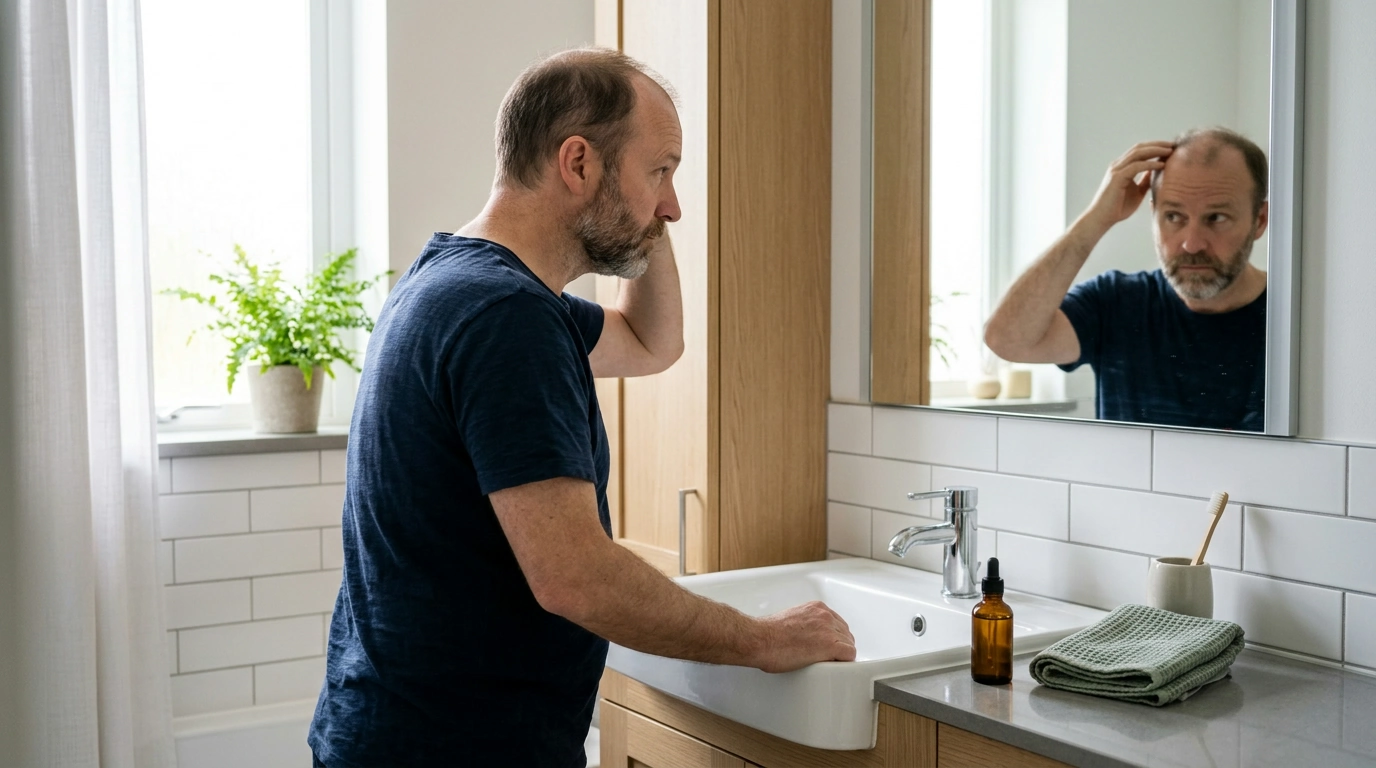
Men’s Hair Loss Products: What Works for Regrowth?
Which is the most effective product for men’s hair loss?
For common male pattern hair loss, finasteride is one of the most effective single treatments for slowing further loss. It is a prescription medication, not a shampoo or supplement. If you want a product you can buy without a prescription, 5% topical minoxidil is the best-established choice for encouraging regrowth. Our team recommends identifying the cause of your hair loss before choosing either one: a product for pattern thinning may not address sudden shedding or a nutritional deficiency.

Choose based on what you want to accomplish
Finasteride targets the hormonal process behind male pattern hair loss, making it a practical option when your priority is keeping the hair you have. A clinician can help you decide whether its potential side effects make it a good fit. Topical minoxidil is applied directly to the scalp and may help thicken hair in thinning areas. Choose the format you can use consistently, since stopping treatment generally means losing its benefits over time.

Featured in this guide
Understanding Hair Loss from the Inside Out – Hair Loss and Nutrient Deficiency eBook, Science-Backed Nutrition Guide, Digital Download for Stronger Healthier Hair
Consider whether combination treatment fits
Some men use finasteride and minoxidil together because they work in different ways: one primarily slows pattern loss, while the other promotes growth. More products are not automatically better, though. Before combining treatments, review your medications and health history with a clinician, and follow each product’s directions rather than increasing the dose to chase faster results.
Match the product to the pattern
A gradually receding hairline or thinning crown is consistent with male pattern hair loss, but rapid shedding, patchy loss, or an irritated scalp deserves a medical evaluation. If inadequate nutrient intake may be involved, a supplement is most useful when it addresses a confirmed deficiency; it is not a substitute for pattern-hair-loss treatment. Our guide to hair loss and nutrient deficiencies can help you understand when nutrition belongs in the conversation.
Set a realistic treatment timeline
Hair grows slowly, so judge a treatment over months rather than days. Take a photo of your hairline and crown under the same lighting once a month to track changes without relying on memory. If you develop troublesome scalp irritation with minoxidil or concerns about finasteride side effects, talk with a healthcare professional instead of simply adding another product. For most shoppers, our starting point is straightforward: consider 5% topical minoxidil for an over-the-counter option, or ask a clinician about finasteride if preventing further pattern loss is your main goal.
FAQ
What is the most effective treatment for hair loss in men?
For male pattern hair loss, finasteride is highly effective at slowing loss, and 5% topical minoxidil is an established option for regrowth. A clinician can help you decide whether to use one or both.
Can a man’s hair grow back?
Yes, some men can regrow or thicken hair with treatment, particularly where follicles are still active. The cause and duration of hair loss affect what is possible.
Is Hims better than Rogaine?
Hims offers different hair-loss products, while Rogaine is a brand of topical minoxidil. Compare the active ingredients and delivery method, not just the brand names.
What did Matthew McConaughey do to regrow hair?
Matthew McConaughey has described using a topical hair treatment, but that account does not establish which product will work for you. For male pattern hair loss, consider treatments with established benefits, such as minoxidil and finasteride.
See if Understanding Hair Loss from the Inside Out – Hair Loss and Nutrient Deficiency eBook, Science-Backed Nutrition Guide, Digital Download for Stronger Healthier Hair fits your setup













Leave a comment