Easy Pet Hair Removal Hacks for Every Surface
Easy Pet Hair Removal Hacks for Every Surface
What are some hacks for removing pet hair?
Pet hair is easier to remove when you match the tool to the surface. We use a simple order: loosen hair that is woven into fabric, collect it, then clean the floor so it does not settle back onto furniture. For a broader routine, see our guide to living comfortably with less pet hair.
Lift hair from upholstery with rubber
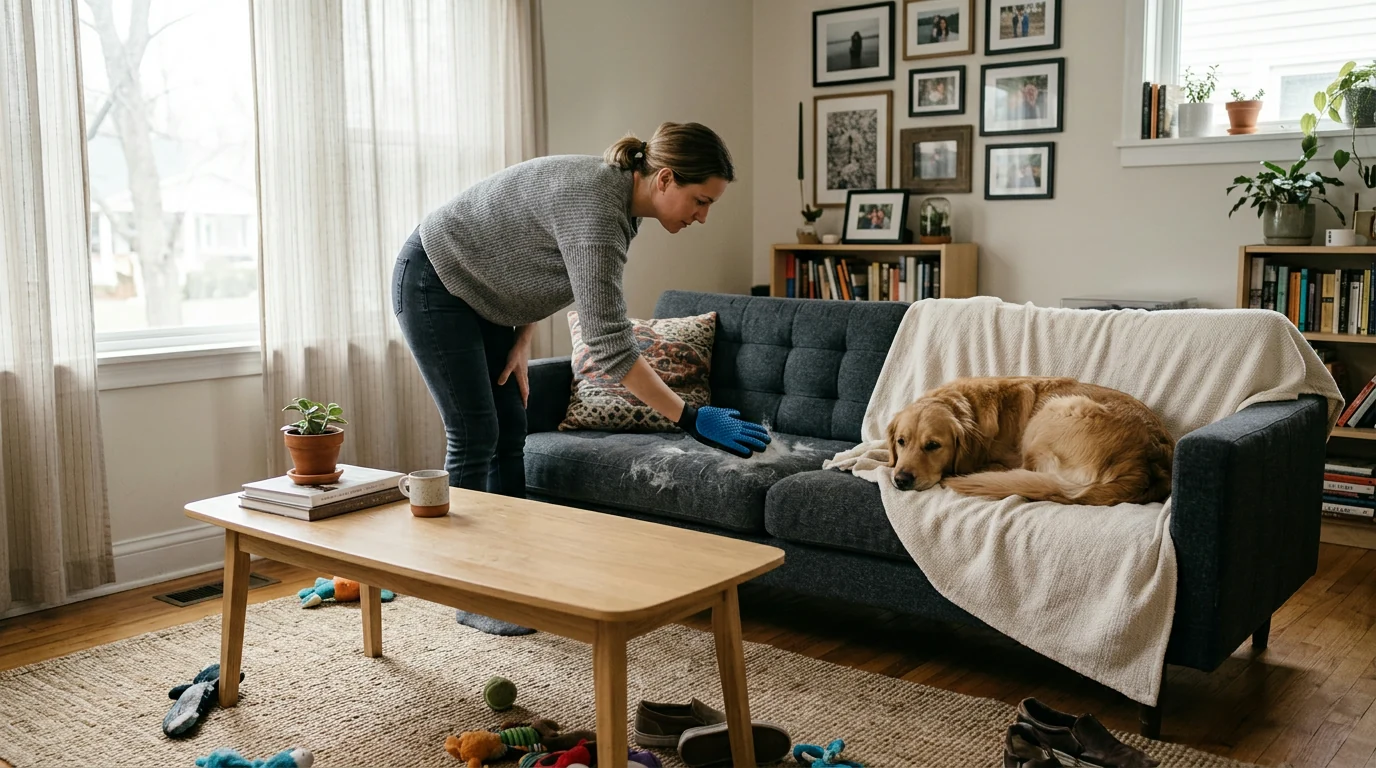
A slightly damp rubber glove can grab hair that a vacuum pass leaves behind. Put on the glove and sweep your hand across a couch or chair cushion in one direction; gather the clumps before they scatter. Test a small, hidden spot first on delicate or moisture-sensitive upholstery.
Featured in this guide
Living Comfortably With Less Fur Everywhere | Practical Ebook for a Cleaner Home | Smart Pet Hair Control Tips for Real Life
Use the right vacuum attachment
For rugs and sturdy upholstery, a vacuum attachment with moving bristles can pull hair from the fibers. Use a crevice tool along baseboards, cushion seams, and furniture edges, where fur collects out of sight. Empty the vacuum bin or replace the bag when needed so suction stays strong.
Make laundry less furry
Shake pet blankets and washable covers outdoors before putting them in the washer. After washing, clean the lint trap and check the washer drum for remaining hair. Follow each fabric’s care label, especially when choosing a dryer setting for synthetic throws or delicate covers.
Catch hair before it spreads
A washable throw on your pet’s favorite chair gives you one removable surface to clean instead of an entire piece of furniture. On hard floors, a microfiber mop can gather loose fur without blowing it around. Our team recommends cleaning high-traffic spots regularly rather than waiting for hair to build up.
FAQ
What pulls dog hair out of the air?
An air purifier with a particle filter can capture some airborne dander and fine particles. Dog hair is heavier and usually settles quickly, so vacuuming and dusting remain important.
What are some home remedies for dogs pulling hair out?
If your dog is pulling out its own hair, contact your veterinarian rather than trying a household remedy. Itching, skin irritation, pain, or stress may need different care.
See if Living Comfortably With Less Fur Everywhere | Practical Ebook for a Cleaner Home | Smart Pet Hair Control Tips for Real Life fits your setup













Leave a comment