Baby Toy Materials: What to Check Before You Buy
Baby Toy Materials: What to Check Before You Buy
Start with the whole toy, not just the material
Words such as “natural” or “non-toxic” can sound reassuring, but neither makes a finished toy automatically safe. A wooden toy can have a loose piece or peeling finish; a fabric toy can have a poorly attached decoration. Size, seams, coatings, enclosed components, and the manufacturer’s intended age range all deserve attention.
Start with the age guidance, then look for parts that could come loose. Pay particular attention to small decorations, loose seams, accessible batteries or magnets, long cords, and pieces that may break off. The U.S. Consumer Product Safety Commission’s toy safety guidance is a useful reference when you want to review common hazards. Inspect toys regularly, especially as your baby begins pulling harder, chewing, and throwing.
Compare materials without picking a universal winner
For each material, consider the finished toy and how you will care for it. No material alone makes every toy suitable for a baby.
| Material | What to examine | Care consideration |
|---|---|---|
| Fabric or plush | Secure seams and firmly attached features; no loose ribbons or small decorations | Follow the care label and let it dry fully |
| Wood | Smooth surfaces, sound construction, and intact paint or finish | Clean as directed; watch for splinters or peeling |
| Silicone | A one-piece or securely constructed design | Follow washing directions and inspect for tears |
| Plastic | Age suitability, sturdy construction, and enclosed components | Watch for cracks and follow cleaning restrictions |
If a toy cracks, tears, splinters, or develops a peeling finish, set it aside. Familiarity does not make a damaged toy suitable for continued play.
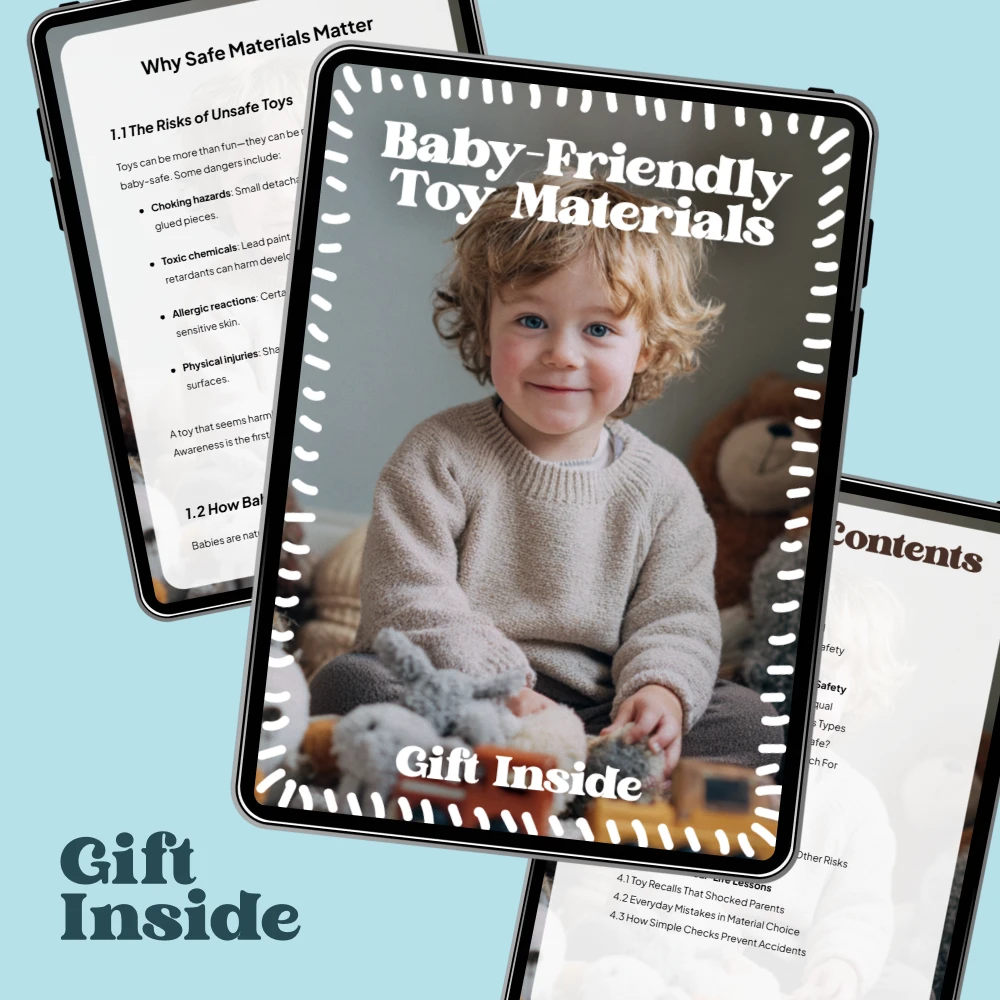
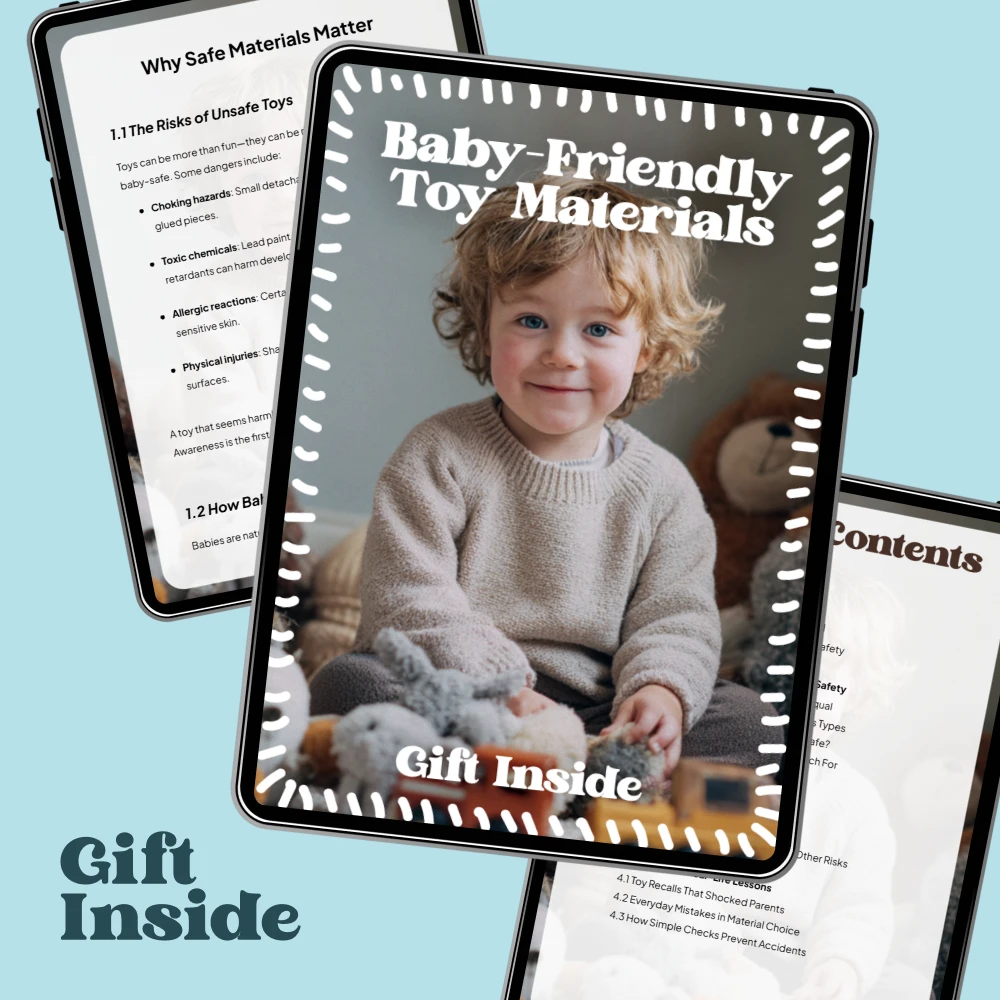
Featured in this guide
Baby-Friendly Toy Materials | Essential Ebook Guide to Safe Toy Materials for Babies, Non-Toxic Choices, Smart Parenting Download
A short routine before play
Our team uses the same questions for new toys and hand-me-downs:
- Is the toy labeled for your baby’s age, and have you read its use warnings?
- Are its stitching, finish, and attached parts intact, with no exposed components?
- Can you follow its cleaning and drying directions?
- Have you checked applicable recalls, especially if it is secondhand or missing its instructions?
If you shop secondhand, our Thrift Like a Pro guide addresses the broader shopping process. For a baby toy, age guidance, condition, and recalls still need their own review.
Choose for the stage your baby is in
For a newborn, consider a simple toy labeled for newborns during supervised awake time. As your baby begins reaching, grasping, and mouthing more deliberately, choose toys intended for that stage and keep inspecting them for wear.
If you want a resource for thinking through material choices, our Baby-Friendly Toy Materials ebook is an optional download. Use it alongside—not in place of—the toy maker’s age and care directions and your inspection of the toy itself.
Keep a buying checklist handy
It can sit alongside the practical checks you make for each individual toy; no guide replaces the manufacturer’s age and use directions or a look at the toy in your hands.
The takeaway is straightforward: choose for your baby’s current stage, examine the finished toy rather than relying on a material claim, follow its care instructions, and inspect it again as play changes.
Before choosing, compare the product details with your daily routine, available space, care needs, and preferred setup. The strongest option is usually the one that fits the intended use clearly and remains simple to clean, store, and check before repeat use.
FAQ
What is an appropriate toy for an infant?
Choose a toy labeled for your infant’s age, with sturdy construction, no accessible small parts or other obvious hazards, and clear care directions. Consider how your baby currently grasps and mouths objects.
What is a good first toy for a newborn baby?
A simple toy labeled for newborns can work well during supervised awake time. Follow its use directions and keep toys out of the baby’s sleep space.
What are some good toys for infants?
Look for age-labeled toys that suit your infant’s current abilities and are easy to hold or explore as directed by the maker. Favor sound construction over a particular material or a large collection.
What is a good toy for a baby?
A good choice suits your baby’s developmental stage, has sound construction, and comes with age and care guidance you can follow. Reinspect it as your baby’s play becomes more active.
See if Baby-Friendly Toy Materials | Essential Ebook Guide to Safe Toy Materials for Babies, Non-Toxic Choices, Smart Parenting Download fits your setup












Leave a comment