Block Noise Through a Shared Wall: Practical Fixes
20% off on product page · save $5.75
Block Noise Through a Shared Wall: Practical Fixes
How do you block sound from a neighbor’s shared wall?
Start by identifying what you hear. Voices and television are airborne noise; footsteps, thuds, and bass may travel through the floor, ceiling, and framing as well as the wall. Our team recommends choosing a repair based on the sound path rather than covering the wall with foam panels, which mainly reduce echo inside your room.
For a broader overview of options, see our guide to blocking sound from a neighbor’s shared wall.
Which gaps should you seal first?
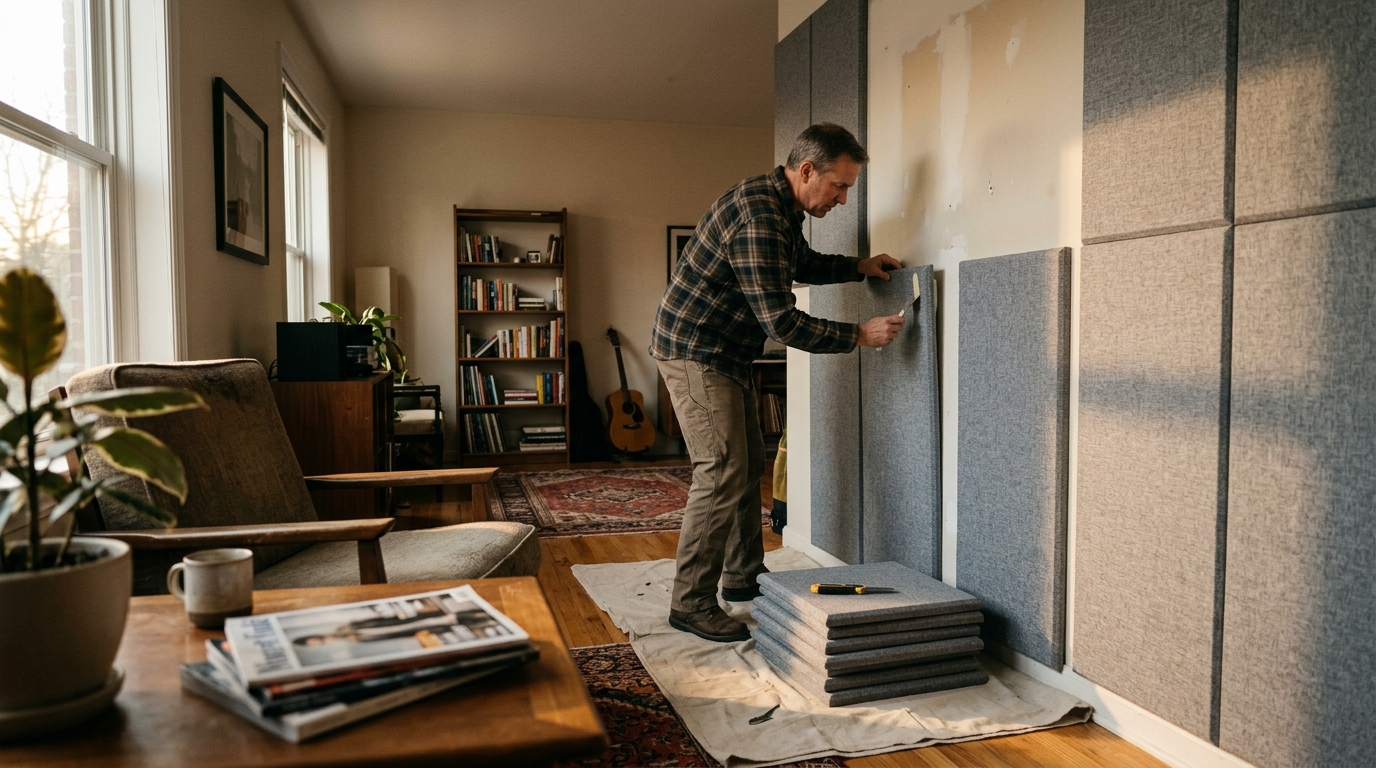
Airborne sound can pass through openings around outlets, baseboards, and wall penetrations. With the power off, inspect electrical boxes for gaps at the drywall; use an appropriate outlet gasket or have an electrician address openings around the box. Seal gaps at baseboards and trim with acoustical sealant, following the product’s instructions. Do not put sealant inside an electrical box or block a vent.
Featured in this guide
Quiet Walls, Calm Minds – A Practical Guide on how to block neighbor noise for Apartments, Condos & Shared Walls
Will adding drywall make a difference?
An additional layer of 5/8-inch drywall can add mass to a shared wall, especially when its perimeter is sealed. For a stronger assembly, ask a qualified installer about a damping compound between drywall layers and how the new layer will attach to the existing wall. Plan for the added thickness at outlets, trim, doors, and built-ins before ordering materials.
When is a new wall assembly worth considering?
If voices remain intrusive after gaps are sealed, a renovation can create a more substantial barrier. One approach uses a separate stud wall with an air gap, mineral wool batts in the new cavities, and drywall on the room side. Keep the new framing from touching the shared wall where the design calls for separation; rigid connections can carry vibration across the assembly.
What if the noise comes around the wall?
Sound may flank a treated wall through the ceiling, floor, ductwork, or adjoining partitions. If a thud is strongest near the floor, adding drywall to the shared wall alone may offer limited relief. Before a major project, note where the noise is loudest and discuss those paths with your installer. Renters can begin with permitted gap sealing and a full bookcase placed against the wall, while recognizing that furniture is not a substitute for construction-grade sound isolation.
FAQ
How can I soundproof my wall to reduce noise from my neighbors?
Seal gaps first, then consider adding mass with another drywall layer and acoustical sealant around its perimeter. If the noise is still disruptive, a decoupled wall assembly may provide more isolation than surface-mounted acoustic panels.
How can I soundproof a wall shared between two duplexes?
Ask a qualified contractor to assess the shared wall and any sound paths through floors, ceilings, or ducts. A plan may include sealing penetrations, adding drywall and damping compound, or building a separate insulated wall; changes must preserve required fire-rated construction.
See if Quiet Walls, Calm Minds – A Practical Guide on how to block neighbor noise for Apartments, Condos & Shared Walls fits your setup













Leave a comment