How to Get Your Car Road Trip Ready: A Checklist
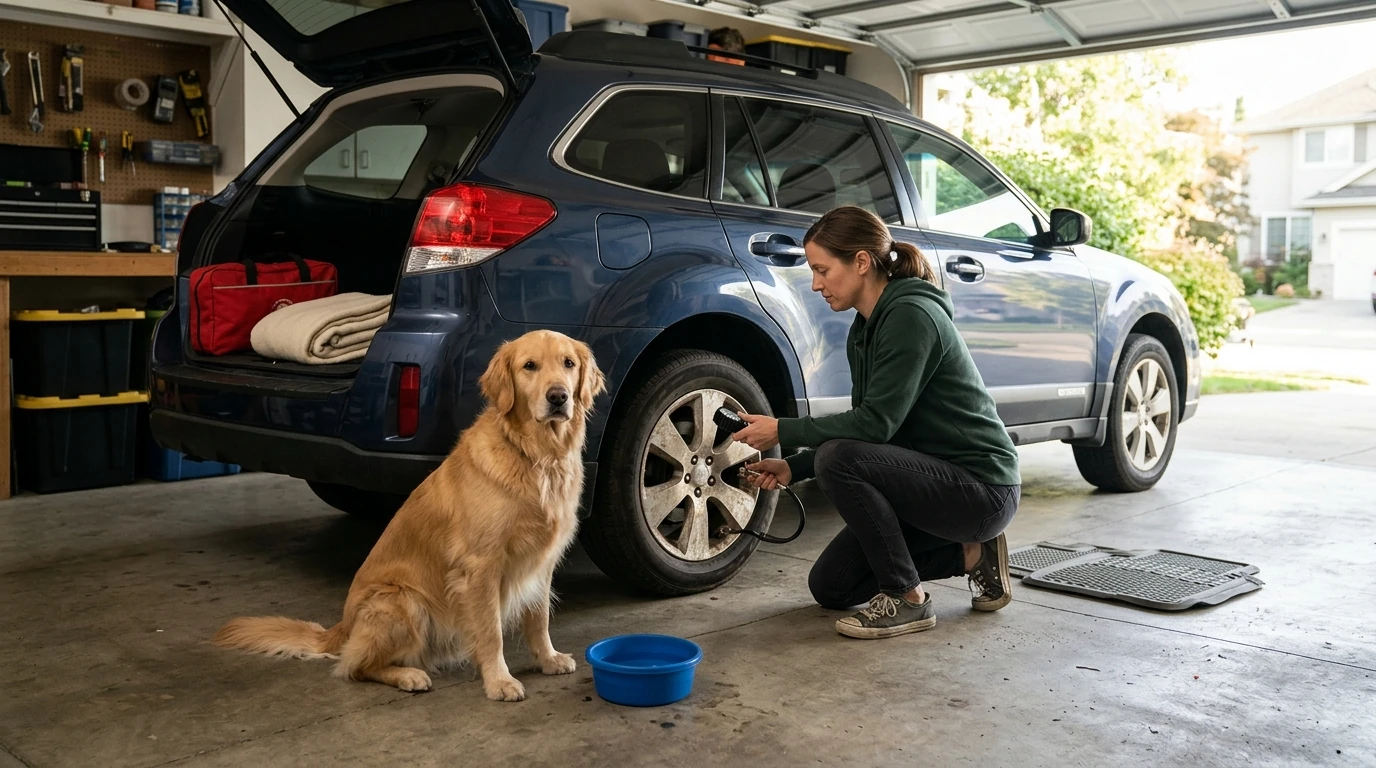
How to Get Your Car Road Trip Ready: A Checklist
Start With a Basic Mechanical Inspection
Check the engine oil, coolant, brake fluid, transmission fluid, and windshield washer fluid before departure. Look beneath the vehicle for leaks, and schedule service if warning lights are illuminated or if you notice unusual sounds, odors, or vibrations.

Inspect Tires and Brakes
Measure tire pressure when the tires are cold and adjust it to the specification on the driver-side doorjamb—not the maximum printed on the tire. Inspect tread depth, sidewalls, and the spare tire, then have the brakes checked if they squeal, pulse, or feel slow to respond.
Featured in this guide
Road Trip Ready With Your Dog: The Ultimate Guide to Traveling with Your Furry Friend
Test Lights, Battery, and Visibility
Confirm that the headlights, brake lights, turn signals, hazard lights, and license plate lights work. Clean the windshield, replace streaking wiper blades, and inspect the battery terminals for corrosion; a battery approaching three to five years old may also benefit from a load test.
Pack Roadside and Emergency Supplies
Carry jumper cables or a compatible jump starter, a tire inflator, pressure gauge, flashlight, first-aid kit, drinking water, and reflective warning devices. Verify that the jack, lug wrench, wheel-lock key, and spare tire are present and compatible with your vehicle.
Check the listed dimensions for pack roadside and emergency supplies against the available vehicle space before use.
Prepare the Cabin and Route
Secure luggage so it cannot shift during sudden braking, and keep frequently used items within safe reach. Download offline maps, review fuel or charging stops, and read the complete car road trip preparation guide before leaving.
The Living Comfortably With Less Fur Everywhere | Practical Ebook for a Cleaner Home | Smart Pet Hair Control Tips for Real Life loosens and collects dog hair from car upholstery and seat seams; it pairs with the featured product during the same trip.
FAQ
What is the 3-3-3 rule for a road trip?
The 3-3-3 rule for a road trip generally means traveling no more than 300 miles per day, arriving by 3 p.m., and staying for three nights. It is especially popular with RV travelers who want a slower schedule and adequate time to rest.
What should I do to get my car ready for a road trip?
To get your car ready for a road trip, inspect fluids, tires, brakes, lights, the battery, wipers, and climate controls. Complete overdue maintenance and pack emergency equipment before starting the drive.
What is the $3000 rule for cars?
The $3000 rule for cars is an informal budgeting guideline sometimes used when deciding whether a major repair is worthwhile. Because definitions vary, compare the repair estimate with the car’s value, reliability, replacement cost, and expected future repairs rather than relying on $3,000 alone.
What is the 1/2/3 rule in driving?
The 1/2/3 rule in driving often refers to counting “one-one-thousand, two-one-thousand, three-one-thousand” after the vehicle ahead passes a fixed point. This creates roughly a three-second following gap, which should be increased in rain, darkness, traffic, or poor road conditions.
See if Road Trip Ready With Your Dog: The Ultimate Guide to Traveling with Your Furry Friend fits your setup
Recommended for you














Leave a comment