Make a Small Social Media Ad Budget Work Harder
Make a Small Social Media Ad Budget Work Harder

Make every test answer a question
Choose one primary outcome for each campaign: purchases, qualified leads, bookings, or another action that matters to your business. Clicks and impressions can help explain what happened, but they should not replace that outcome as your measure of success.
Next, set a test budget you can afford to spend even if the campaign produces no return. Keep platform ad spend separate from costs such as photography, design, or video production so you know what the test truly cost. Set an end date or spending cap before launch, then check that the platform settings reflect it.
Estimate an acceptable cost per result using your margins and what a customer is worth to you. If a sale leaves little margin, an expensive purchase may not be sustainable. Treat your estimate as a decision threshold—not a promise that the platform will deliver results at that price.
Choose platforms based on customers, not popularity
Start where likely customers already spend time and where the available ad format suits your offer. A product that benefits from a quick visual demonstration may call for a different placement than a service that needs a detailed explanation. Begin with one platform so a small budget is not spread too thin.
Once that first test produces useful data, consider a second platform if it reaches relevant people you may be missing. For a fairer comparison, keep the offer and landing page consistent while adapting the image, video, and copy to each placement. Compare costs per purchase, qualified lead, or booking—not clicks alone. Check each platform’s current setup and reporting guidance in its official documentation, such as the Meta Business Help Center.
Featured in this guide
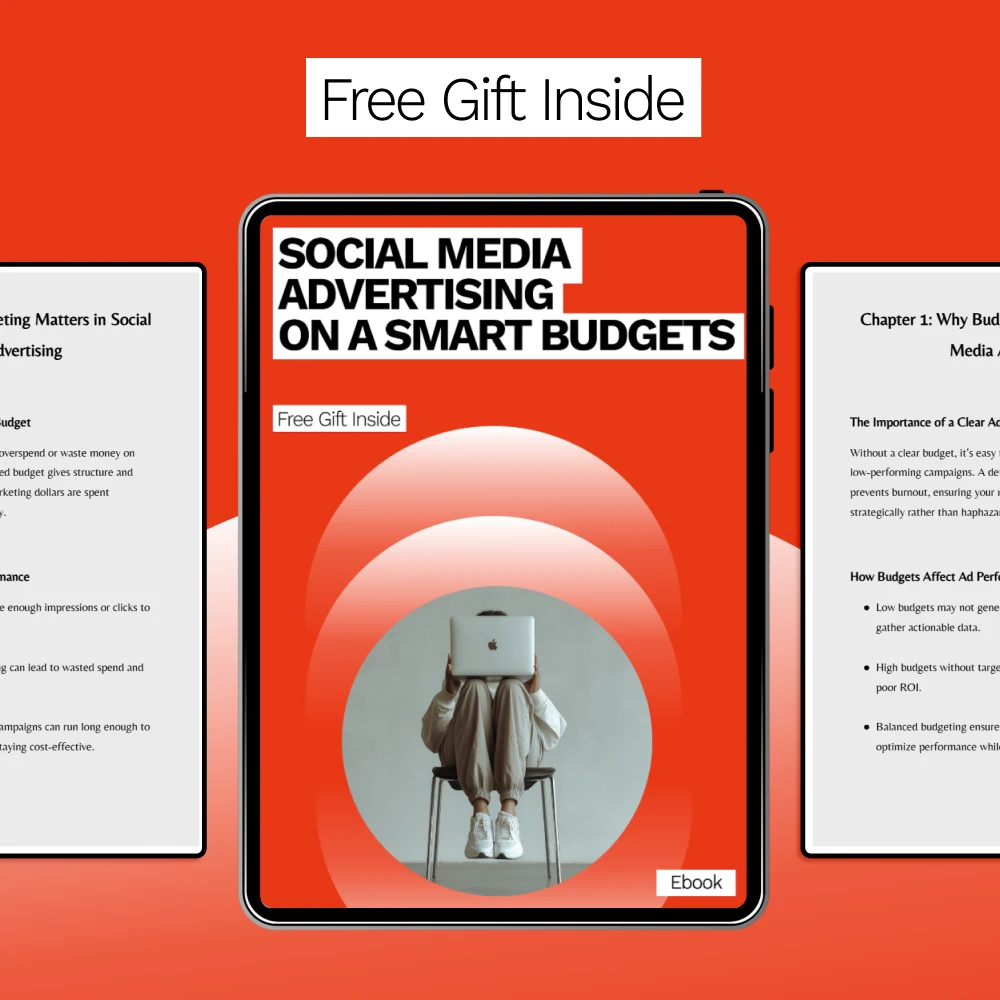
Social Media Advertising on a Smart Budget – Ultimate Guide, eBook & Checklist for Small Business Ad Spend, AI Optimization, and Multi-Platform Campaigns
Test one meaningful change at a time
Build the first test around one offer, a defined audience, and a clear next action. The destination page should match what the ad promises so a disappointing result is easier to interpret.
Then compare a few distinct approaches, such as a customer problem, a product demonstration, and a straightforward offer. Do not split a small budget across so many variations that none receives enough activity to assess. Check for broken links and unexpected spending, but avoid rewriting the test after every early fluctuation.
Let AI assist, not approve
AI tools can suggest ad angles, draft copy, and summarize reports. Check every claim, image description, and call to action against the real offer and the platform’s current rules. Do not enter sensitive customer information without appropriate permissions and safeguards.
Treat automated campaign recommendations as proposals to evaluate, not permission to exceed your ceiling. Confirm that tracking captures the business result you chose before relying on a report.
Keep a weekly decision record
Once a week, confirm that tracking works, spend remains within your limit, and the ad still matches its landing page. Record spend, meaningful results, and cost per result. Mark each campaign continue, revise, pause, or expand , with a short reason you can revisit later.
Check the listed dimensions for keep a weekly decision record against the available vehicle space before use.
Compare related options such as Understanding Hair Loss from the Inside Out – Hair Loss and Nutrient Deficiency eBook, Science-Backed Nutrition Guide, Digital Download for Stronger Healthier Hair to match features, dimensions, and use case before choosing.
Before choosing, compare the product details with your daily routine, available space, care needs, and preferred setup. The strongest option is usually the one that fits the intended use clearly and remains simple to clean, store, and check before repeat use.
FAQ
How much do social media ads cost?
Costs vary with the platform, audience, competition, objective, and creative. Set an affordable test ceiling and measure cost per business result rather than relying on a universal daily budget.
What is the 5 5 5 rule on social media?
There is no single, universally accepted 5 5 5 rule for social media advertising; people use the label for different posting and engagement routines. Ask what each “5” means before using a version of it to plan paid campaigns.
What is social media advertising?
Social media advertising is paid promotion on social platforms, with choices about audience targeting, placements, budgets, and measurable objectives. Unlike unpaid posts, ads require spending to distribute the message.
See if Social Media Advertising on a Smart Budget – Ultimate Guide, eBook & Checklist for Small Business Ad Spend, AI Optimization, and Multi-Platform Campaigns fits your setup













Leave a comment